Guide section
What a Teacher House Hack Is
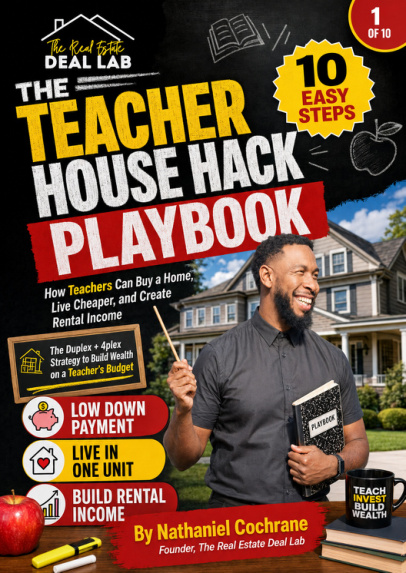
A teacher house hack is an owner-occupied property where rental income from rooms, units, or an accessory space helps offset housing cost.
House hacking can be a practical way for teachers to learn ownership while living in the property. It may involve renting a bedroom, buying a duplex, using an accessory dwelling unit, or sharing space with clear rules.
The goal is not to make the property look perfect on social media. The goal is to reduce guesswork, understand the numbers, and choose a property that fits income, time, privacy, and long-term plans.
Guide section
Start With Financial Fit
A house hack should be affordable before rent, then improved by rent, not dependent on perfect rental income to survive.
Teachers often have predictable income, but that does not mean every owner-occupied deal is safe. Start with the payment you can handle, the cash you can bring, and the reserves you need after closing.
Do not let projected rent convince you to ignore your baseline budget. If one vacancy creates immediate stress, the property may be too tight for a first house hack.
- Confirm your comfortable monthly payment.
- Keep repair and vacancy reserves after closing.
- Ask lenders how salary, contracts, and seasonal pay are reviewed.
- Plan for summer, school-year schedule changes, and maintenance timing.
Guide section
Compare the Main House Hack Property Types
The best house hack type depends on privacy needs, local rules, financing, rent demand, and repair tolerance.
A duplex may offer more separation, but it may cost more. A room rental may be easier to buy, but it requires more shared living boundaries. An accessory dwelling unit may be attractive, but rules and build cost matter.
Compare property types before falling in love with one listing. Teachers should choose the structure that fits both the math and the lifestyle.
| Property type | Potential advantage | Watch out for |
|---|---|---|
| Single-family room rental | Lower entry price in some markets | Privacy, occupancy rules, resident fit |
| Duplex | Clearer separation between owner and tenant | Higher price and repair complexity |
| Accessory unit | Flexible family or rental use | Permits, build cost, utility setup |
| Basement or suite | Can create privacy inside one home | Code, egress, moisture, parking |
Guide section
Verify Rental Rules Before You Count Rent
The rental plan must match local rules, lender requirements, insurance coverage, and fair housing obligations.
A house hack can be legal and practical in one neighborhood, then restricted in another. Check local rental rules, occupancy limits, HOA rules, parking requirements, and whether the lender requires you to occupy the property for a certain period.
Written leases, clear screening criteria, and consistent communication protect the owner and the resident. This is especially important when the owner and resident share the same property.
Guide section
Build Systems Around the School Year
Teachers should design maintenance, leasing, and resident communication around the realities of the school calendar.
A teacher's schedule has unique rhythms. There may be heavy work periods, breaks, summer windows, and after-school limits. A realistic house hack plan respects that calendar.
Schedule larger repairs during breaks when possible. Create a maintenance contact list before the year gets busy. Use written rent collection and resident communication systems so the property is not dependent on memory.
- 1
Set a maintenance rhythm
Do preventative tasks before the school year and during planned breaks.
- 2
Create resident expectations
Document parking, guests, quiet hours, cleaning, and repair requests.
- 3
Use simple tracking
Track rent, repairs, utilities, and receipts from the first month.
- 4
Review the plan annually
Revisit rent, expenses, reserves, and exit strategy before each new school year.
Guide section
Know the Exit Options Before You Buy
A strong teacher house hack should leave options to keep, rent, refinance, sell, or move into the next property.
The first house hack is also a learning asset. It should teach you how to run numbers, manage repairs, understand tenants, and think like an owner.
Before buying, ask what happens in two to five years. Can the property become a normal rental? Could it support a refinance? Would it be easy to sell? Does it fit your family or career changes if your life shifts?
FAQ
Questions this guide answers
Sources and trust
Educational sources and disclosures
This guide is educational content from The Real Estate Deal Lab. It is not financial, legal, tax, lending, or investment advice. Use qualified professionals before making decisions that affect contracts, financing, taxes, insurance, or legal structure.